Claim, Evidence and Inference in a Persuasive Message
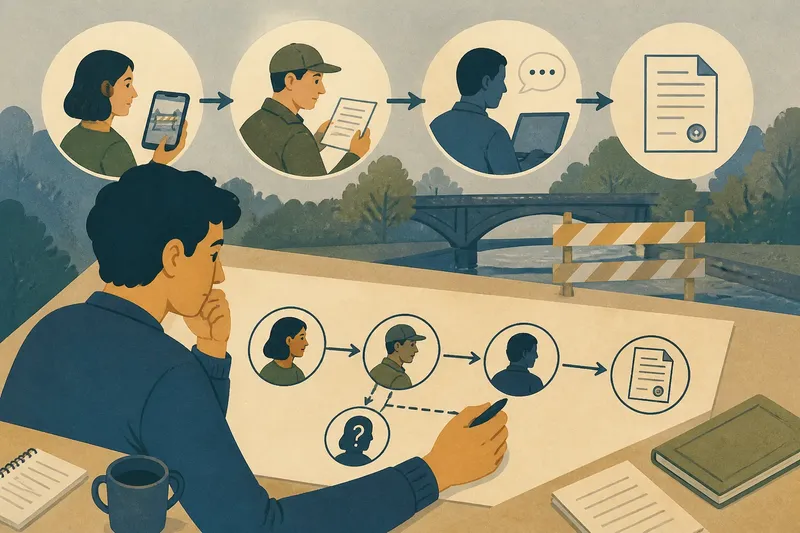
Claim, evidence and inference help you see what a message states, what supports it and what conclusion it invites you to draw.
The common mistake with a persuasive message is to treat its supporting material as if it were the conclusion itself. A chart, quotation or photograph may look substantial, but confusing it with the claim can leave you accepting more than it actually supports. Separating claim, evidence and inference makes the gap visible.
Read the message once for its overall point. Then take it apart. These numbered checks are a way to inspect what is stated, what is offered in support and what a reader is being asked to conclude. They are not a verdict on whether the message is true; that requires examining the material and its context.
1. Write the claim as a complete sentence
The claim is the proposition the message asks you to accept. It may appear in a headline, a caption, a video narration or a sentence buried beneath a striking image. Put it into a plain sentence that could be judged true or false.
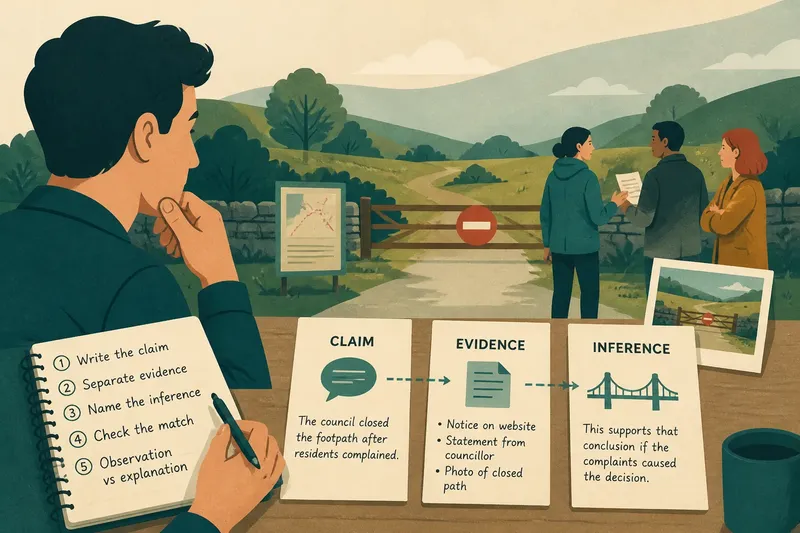
For instance, “The council closed the footpath after residents complained” contains a claim about a closure and a claim about its cause. Those are separable. The path might be closed while the reason remains unknown. A persuasive message can bundle several propositions into one fluent line, so split them where a reader could reasonably accept one and doubt another.
Watch for claims hidden inside questions or suggestions. “Why are officials ignoring the warnings?” presumes that warnings exist and that officials have ignored them. Before answering the question, identify those presuppositions. A question mark does not make an assertion disappear; it merely gives it a coat.
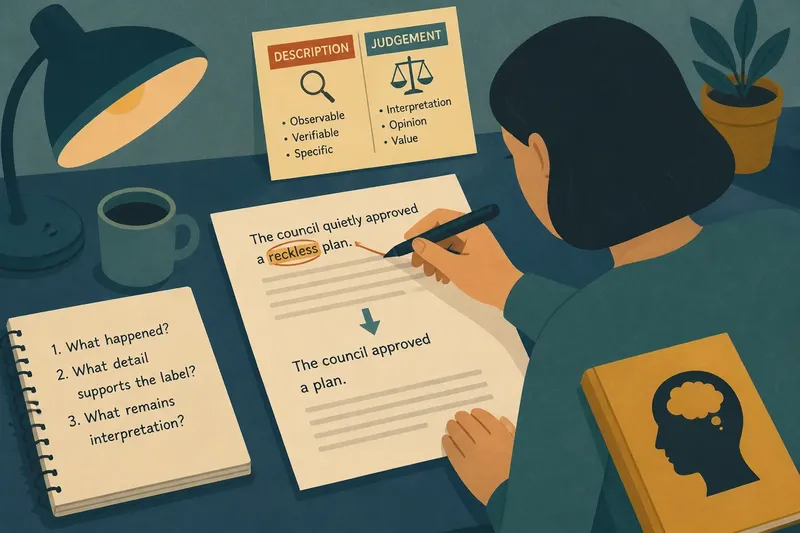
What to do: underline the sentence that carries the message’s main point, then rewrite it without rhetorical wording. If you cannot state what would count as evidence against it, the claim may be too vague, or several claims may have been bundled together.
2. Separate the claim from the evidence offered
Evidence is the material the message presents in support of its claim: a document, a recorded statement, a dataset, an image, an observation or a description of an event. It is not automatically reliable just because it is concrete. Nor does a persuasive tone make it evidence.
List the supporting items separately from the proposition. “A notice on the council website says the path is closed” is evidence for the closure. It is not, by itself, evidence that residents’ complaints caused the decision. A message can offer relevant support for one part and leave another part untouched.
Also distinguish primary material from someone’s account of it. A quoted passage from a report is not the entire report; a summary of a meeting is not the meeting record. The distinction does not settle which is dependable. It tells you what you are actually being asked to rely on.
What to do: make two short notes: “The message claims…” and “It offers…”. If the second note contains interpretation rather than a source or observable material, record that too. “The speaker says the document proves X” is evidence of what the speaker says, not yet evidence that X is true.
3. Name the inference between them
An inference is the reasoning that connects evidence to a conclusion. It may be stated openly: “The path closed soon after the complaints, so the council acted because of them.” More often, the reader is expected to supply the connection without noticing it.
Ask what extra premise would have to be true for the evidence to support the claim. A closure following complaints could fit a causal explanation, but the timing alone does not establish the cause. Perhaps there was maintenance work, a safety inspection or another decision. These are possible alternatives, not claims about what happened. Their purpose is to show what the timing leaves unresolved.
Try wording the inference as “This supports that conclusion if…”. The missing condition becomes easier to inspect. If the message offers no reason to accept that condition, its conclusion may be stronger than its evidence warrants.
What to do: write one sentence describing the bridge from evidence to claim. Then ask whether the evidence supports that bridge, merely fits it, or leaves it open. “Fits” is useful, but it is not the same as “establishes”.
4. Check whether the evidence matches the exact claim
Evidence can be genuine and still be a poor match. A message about a whole town may rely on one person’s account. A claim about a continuing pattern may be supported by an isolated event. A statement about cause may be backed only by evidence that two things happened at the same time.
Compare the scope and wording on both sides. Does the evidence concern the same place, period, group and action as the claim? If the claim says “all residents”, evidence about a small set of comments cannot establish what everyone thinks. It may still show that those comments were made. Keep the narrower conclusion intact rather than stretching it to fit the larger one.
Look for changes in certainty as well. “May be associated with” and “caused” are different claims. So are “some reports describe” and “the policy has failed”. A message may move between these formulations as it summarises evidence. Follow the exact proposition, not the confidence of the prose.
What to do: circle broad terms such as “everyone”, “always”, “proves” or “the reason”. Ask whether the evidence covers that breadth. Where it does not, rewrite the claim at the narrower scale that the material can support.
5. Notice when an observation is presented as an explanation
An observation describes what is visible or recorded. An explanation says why it happened. The transition can be subtle: a queue formed after a service changed, so the change must have caused the queue. The sequence may be worth investigating, but sequence alone leaves room for other causes.
Keep the two sentences separate. “The queue was longer on the day described” is an observation, assuming the record supports it. “The new service caused the longer queue” is a causal claim. It needs a bridge that addresses other plausible factors, such as timing, demand or a disruption. Which factors matter depends on the situation.
This distinction also helps with individual stories. A person’s experience can be meaningful evidence about that experience. It does not automatically establish what caused it or how common it is. The careful reading is not to dismiss the account, but to avoid making it answer a different question.
What to do: mark sentences that say what happened and sentences that explain why. If one sentence does both, split it. Then consider whether the message supplies support for the explanation, rather than only for the event.
6. Look for the conclusion that is implied rather than stated
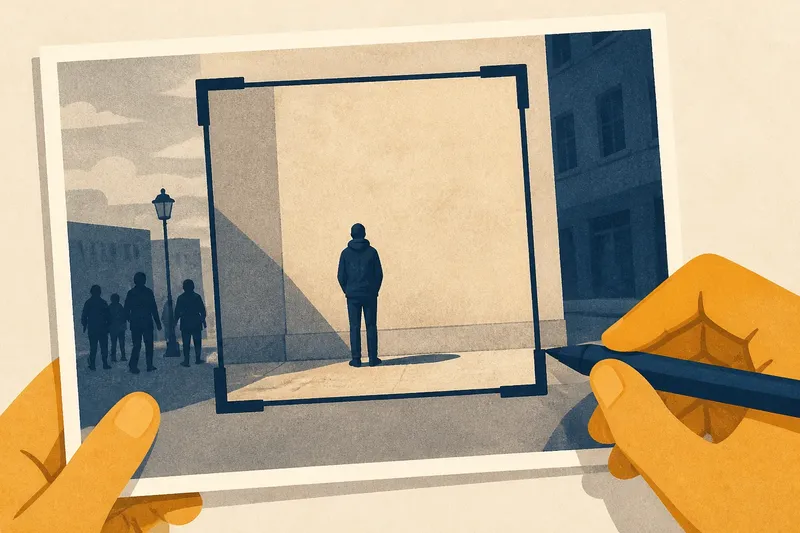
Persuasive messages often stop short of saying what they want you to conclude. A sequence of images, selected details or loaded comparisons can do the work. “The proposal has attracted objections” may be accurate; placed beside an image of an empty room, it may invite the reader to infer that the proposal lacks public support. That further conclusion needs its own basis.
Ask, “What am I being nudged to believe or do next?” The answer may be an unstated judgement, a prediction or a recommendation. Keep it distinct from the message’s literal claim. A report that a person missed a meeting does not by itself establish that they are indifferent; a notice that a rule changed does not itself show that the change is harmful.
Say you read a post stating that a library has shortened its evening opening and showing a notice on the door. The notice supports the change in hours. If the post then implies that staff no longer value evening readers, that is an inference about motive, not information contained in the notice. You can accept the narrower claim while withholding the broader one.
What to do: finish the sentence “The message wants me to conclude that…”. If the answer differs from its explicit claim, inspect the additional reasoning separately.
7. Separate missing evidence from evidence against the claim
A message may not provide enough support for its conclusion. That does not, by itself, show the conclusion is false. “The post does not establish why the path closed” is a judgement about the support presented. “The council did not close it because of complaints” is a different claim and needs evidence of its own.
This distinction prevents a familiar mistake: treating a gap in an argument as proof of the opposite. It also keeps uncertainty honest. You can say that the evidence is insufficient, that the inference remains plausible, or that the available material points against the claim. Those are different assessments, and the wording should reflect which one you mean.
When a message offers a source, check whether it answers the particular question at issue. A public notice may settle the opening hours but say nothing about the reasons for changing them. No need to treat a useful source as useless merely because it cannot carry every conclusion placed on it.
What to do: record the status of each part in separate words: supported, unsupported, contradicted or still open. Use “unsupported” when the message has not made its case; reserve “false” for a claim that the evidence actually rules out.
8. Decide what the argument supports, and what is not worth doing
Bring the pieces back together without making them say more than they can. State the claim, name the evidence and describe the inference in ordinary language. Then give a measured judgement: the evidence supports the narrow point, the cause is uncertain, or the implied conclusion goes beyond the material provided.
Imagine a neighbourhood post says a new bus stop has reduced missed appointments, citing one resident who arrived on time after the stop opened. The account supports that this resident made the journey successfully on that occasion. It does not establish that missed appointments fell across the neighbourhood or that the stop caused a wider change. A sensible judgement preserves the useful observation while leaving the larger claim open.
It is not worth diagramming every sentence in a casual message or chasing every remote alternative. Focus on the claim that matters, the strongest evidence offered and the inference that carries the most weight. This keeps scrutiny proportionate; it also saves you from spending an evening cross-examining a bakery notice.
For claim, evidence and inference, the practical test is whether each part has been given its proper job. A claim says what is being asserted. Evidence supplies material that may support it. Inference explains the connection. If one part is doing the work of all three, pause before accepting the conclusion.
Questions readers ask about claim, evidence and inference?
Can a claim also be evidence?
A sentence can be evidence for one question and a claim in another argument. A witness statement, for example, is evidence that the witness made that statement; whether the event described occurred is a separate question.
What is the difference between evidence and an example?
An example illustrates a point, while evidence is offered to support a particular claim. One example may support a narrow statement about that instance, but it cannot automatically establish a broad pattern.
Does a source make a claim reliable?
A source provides material to assess, not an automatic endorsement of every conclusion drawn from it. Check what the source actually says and whether it bears on the claim at hand.
What should I say when the inference is unclear?
Describe the gap plainly: the evidence is compatible with the conclusion, but does not establish it. That is more precise than calling the whole message true or false when the support is incomplete.