Who Is Speaking, and How Would They Know?
Assess a source by tracing its access and information route, so you can distinguish eyewitness accounts, specialist insight and repeated hearsay.
The common mistake with a confident source is to treat certainty as access. It can leave you repeating a claim from someone who never witnessed the event, or dismissing an expert who can explain the relevant records. A source assessment begins by tracing how information reached the speaker.
Use the week below to map that route. The aim is not to grade a person’s honesty. It is to distinguish what they saw, what they were equipped to interpret, and what was passed to them by someone else.
On the first day, name the source behind the statement
Choose one article, post, interview or recorded statement. Identify who is responsible for the specific information, not merely the outlet or account that shared it. A reposting account, headline writer and quoted speaker are separate participants.
Write down the statement and name its speaker. If an article says “officials confirmed” but gives no names or document, record that gap. Do not quietly supply a source the article has not supplied.
Say you see a neighbourhood post claiming a bridge is closed because of damage. The author might have seen a barrier, read a notice or heard a rumour. Start by recording what the post actually says and what it leaves unspecified.
On the second day, map what the speaker encountered
Ask whether the speaker was present, handled the material being described, or received an account from another person. These routes are not interchangeable. A witness may describe what they saw; someone who read a notice can report its wording; a person repeating a rumour can identify only what they were told.
Mark the boundaries of the encounter. “I saw water on the road” reports an observation. “A burst main caused it” adds an explanation. The speaker might be right, but the cause comes from a different route of knowledge and needs its own basis.
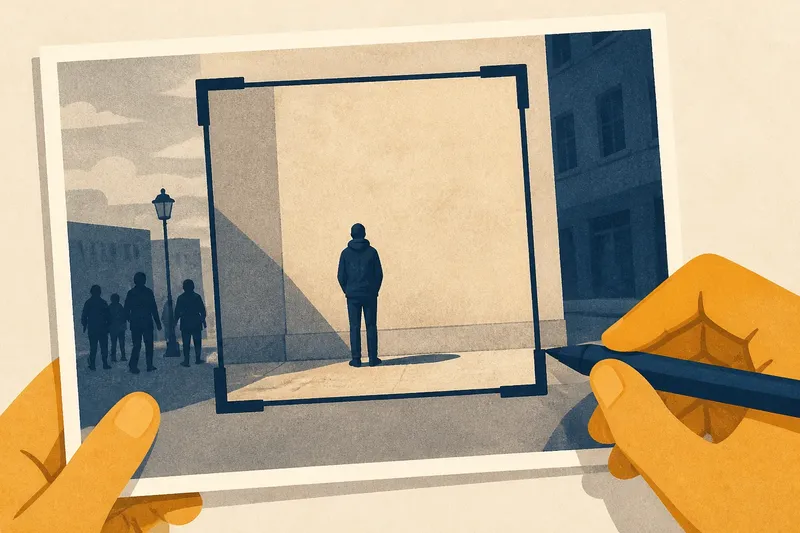
For a recording or document, note whether the source made it, received it or merely described it. A person who watched a clip can say what appears in the clip. Without further information, they may not know when it was recorded or what occurred outside the frame.
On the third day, look at what expertise can interpret
Expertise is useful when the question concerns a field the person knows. Ask what the relevant experience or training covers, then compare it with the statement being made. A transport engineer may explain how bridge inspections are carried out without knowing what inspectors found at a particular bridge.
Separate explanation from access to a specific case. “This can happen when” describes a possible mechanism; it does not establish that it happened here. Note whether the expert is working from an examination, a document, an account from someone involved or a general explanation.
Credentials provide context, not universal access. Someone may be highly knowledgeable in one area and have no particular route to a separate fact. Pay attention to stated limits and to what information the expert says would alter their interpretation.
On the fourth day, follow the route of a secondhand account
Secondhand information travels through a person, document, broadcast or online account. To understand its standing, trace the route backwards: who supplied it, what access did that person have, and can the reader see that path?
Several outlets repeating one unnamed source do not necessarily provide several routes. Find the earliest identifiable statement or document where possible. If the trail ends at “people are saying”, keep that description attached rather than treating repetition as a new source.
A single report can contain different routes. A reporter may attend a public meeting, consult a specialist about a technical matter and relay an account of events elsewhere. Record those parts separately; attendance at the meeting does not give the reporter direct access to everything in the report.
On the fifth day, draw a source map
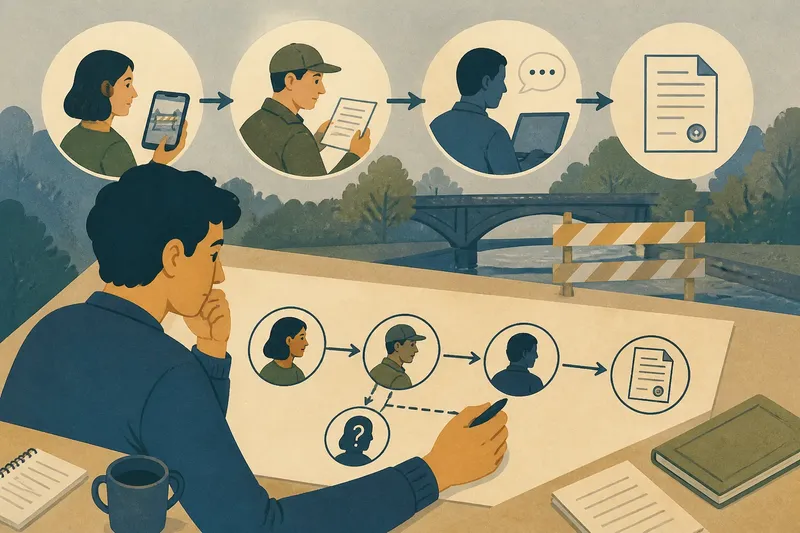
Instead of asking whether a claim sounds convincing, sketch who passed information to whom. Put the original speaker, document or recording at one end and the statement in front of you at the other. Use arrows for each hand-off, and mark any unnamed person or missing link.
For a consequential statement, look for a route that does not simply repeat the first one. A dated public notice and a person who saw a barrier may provide different kinds of information. Two posts quoting the same anonymous message share a route, however different their wording.
Say you are reading a post about the bridge. It quotes a neighbour who saw a barrier, while the post’s author says a friend blamed damage. Draw one path from the neighbour to the post and another from the friend to the author; the first may support that a barrier was seen, while the second leaves the cause untraced. If a council notice later confirms a closure but gives no reason, add it as a separate route and leave the damage explanation unresolved.
On the sixth day, keep reporting verbs accurate
Choose wording that identifies the route: “the neighbour reports seeing a barrier”, “the engineer describes a possible cause”, or “the notice says the bridge is closed”. This keeps a report, an interpretation and a document’s wording distinct.
If the route does not reach the point you need, look for a more direct document or speaker, leave the question open, or refrain from passing on the claim. That decision concerns the information available, not the speaker’s character.
It is not worth spending an afternoon inferring a stranger’s motives from a confident tone, polished profile or list of credentials. Those details may prompt further questions, but they do not reveal the route by which the speaker learned the fact.
On the seventh day, audit the map before sharing
Review the routes you recorded. Check whether a link depends on an unnamed intermediary, whether several accounts lead back to one origin, and whether a document or recording is being described without being shown. Update the map if a new source appears; if the route remains unclear, preserve that uncertainty in any wording you share.
Use these questions to check your notes:
Can a witness account be mistaken?
Yes. A witness can describe what they recall seeing, but memory and perception have limits. Keep the account distinct from explanations about cause, timing or identity.
Can an expert comment without witnessing an event?
Yes. An expert may interpret a record or explain a process without having observed the event itself. Note the material they used and the limits they stated.
How can I tell whether reports have separate origins?
Trace each report to its named speaker, document or recording. If several versions lead back to one statement, they are repetitions of one route rather than separate origins.
What should I do with an anonymous source?
Record what access the publisher says the source had and what explanation it gives for withholding a name. If the route is not described, retain that gap and seek an identifiable document or speaker before relying on the account.
Keep the information route visible
When you pass something on, include who supplied it and how it reached you. “A neighbour says they saw a barrier” is different from “the bridge is closed because of damage”. The first identifies an account; the second adds a cause that may have no visible route.
For source assessment, a short note on the speaker, the path the information travelled and the missing links is often enough. It gives the next reader a chance to judge the account without mistaking a tidy chain of retellings for direct access.